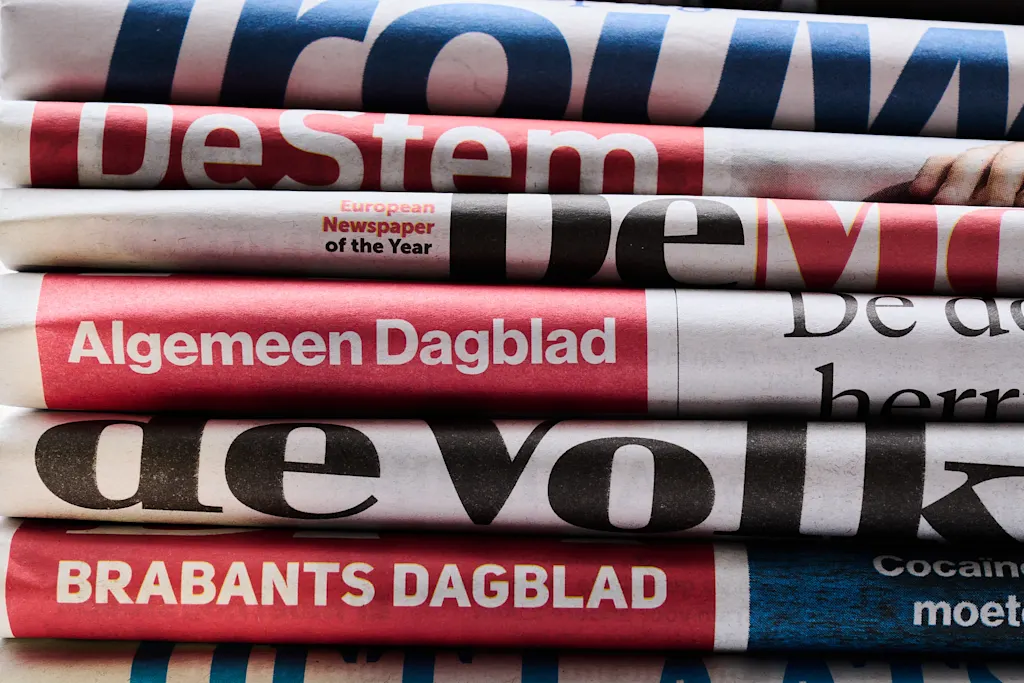
DPG Media renews successful newspaper initiative for people in poverty
Providing free access to paid journalism for people living in poverty has direct positive effects on their sense of connection and involvement in society. Recipients understand the news better, enabling them to form opinions and participate in conversations about world events. These positive effects emerged from a study conducted by Windesheim University of Applied Sciences into the DPG Media project launched in 2024, which provides 5,000 free subscriptions over a three-year period to individuals on a limited budget
Even before it concludes, the media group has already decided to continue the project. DPG Media CEO Erik Roddenhof explains why: “The results of this study, as well as our own experiences over the past two years, clearly demonstrate the impact of this project. In addition to a better understanding of the news, people feel more connected to their surroundings, which in turn leads to greater involvement in society. This is urgently needed in a world faced with increasing disinformation and declining trust in institutions. Although news is not free, we do believe it should remain accessible to everyone. We are therefore continuing the project, also because it aligns so perfectly with our mission: making quality journalism accessible to all Dutch and Flemish people.”
Significantly expanded
The project began a few years ago at De Gelderlander, one of DPG Media's regional newspapers, and targets people who are interested in news and in-depth reporting but lack access due to circumstances, such as a limited budget. In 2024, DPG Media significantly expanded this initiative to other daily newspapers in the Netherlands and Flanders. Early this year, the Windesheim study into the impact of the project focused on a total of 126 recipients of the Amsterdam-based newspaper Het Parool and the Flemish newspaper Het Laatste Nieuws. They completed three questionnaires: before the subscription started, after six months, and after twelve months. The results primarily show 'a clear and lasting increase in perceived access to news, the feeling of being sufficiently informed, news comprehension, and opinion formation'. There are also slight positive effects on self-confidence and trust in institutions, although longer-term research is required to draw firm conclusions.
Personal experiences
In open-ended questions, participants responded very positively to the impact of the subscription:
‘It is so important to have access to more background information on the news, even on a tight budget.’ ‘A new perspective to compare with other news channels, hopefully providing a more complete picture of what is going on in the world.’
‘Less chance of getting trapped in an echo chamber, which can easily happen on social media.’ ‘It inspires and informs me. I hope I can keep the subscription for longer than a year. It is too expensive for me to get a subscription myself.’
Collaboration with social organizations
Each year, DPG Media provides 5,000 free subscriptions of choice. Through partnerships with organizations such as Stichting Armoedefonds, Quiet, and Netwerk tegen Armoede, these reach the right target group. Alongside improving news comprehension, DPG Media also aims to make a positive contribution to promoting reading and combating declining literacy.
The results of the study conducted by Windesheim University of Applied Sciences can be viewed on this website.